Chill Form Swap Puzzle stands out for its elegant simplicity. The two-form mechanic is introduced clearly and then combined in increasingly inventive ways. Each level feels like a small logic puzzle that requires careful observation rather than quick reflexes. The lack of timers or penalties creates a relaxed atmosphere where experimentation is encouraged. The visual style is clean and unobtrusive, letting the puzzles take center stage. This is a well-designed game that respects the player's intelligence and offers genuine satisfaction upon solving each challenge.
The core idea revolves around a single character that can assume two distinct shapes. In its first form, the block behaves like a standard platformer character, capable of walking across flat surfaces and leaping onto platforms. The second form alters the block's physical properties, making it slippery and able to glide over terrain. This sliding movement lets the block cross gaps that would otherwise be too wide, or build enough momentum to shatter fragile barriers. Players must decide which form to use at each moment, as the environment is designed to require both types of movement in sequence.
Early stages introduce each form individually, allowing players to understand their basic capabilities. Later puzzles combine both forms in increasingly complex arrangements. The layout of platforms, gaps, and breakable walls is carefully arranged so that only one correct sequence of transformations leads to success. There are no time limits or score multipliers, which lets players think through each move at their own pace. The difficulty curve is gentle, with new concepts introduced gradually so that players of all ages can build confidence.
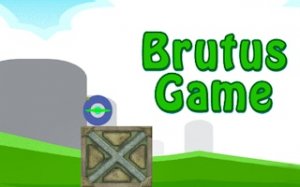
The game presents a clean, colorful aesthetic with simple geometric shapes and soft pastel backgrounds. Animations are smooth and responsive, giving clear feedback when the block changes form or interacts with the environment. The visual design avoids clutter, making it easy to read each puzzle at a glance. Sound effects are minimal but pleasant, reinforcing actions without becoming distracting. This restrained presentation helps maintain focus on the logical challenges at hand.
When a player makes a move that cannot lead to a solution, the game provides subtle visual cues rather than explicit error messages. This encourages players to reflect on their choices and try alternative approaches. The absence of a strict failure state reduces frustration, as players can always restart a level from the beginning. This design philosophy supports a relaxed, exploratory play style where trial and error is part of the learning process.
Once a level is completed, players may revisit it to improve their efficiency. While there is no formal scoring system, the satisfaction of solving a puzzle with fewer transformations or in less time provides its own reward. The game's structure encourages players to internalize the movement properties of each form, leading to a deeper understanding of the physics at play. This makes subsequent playthroughs feel more fluid and deliberate.






Player Comments
Sign in to comment
You must be logged in before posting a review or rating.
No account? Create one
No comments yet. Be the first to comment!